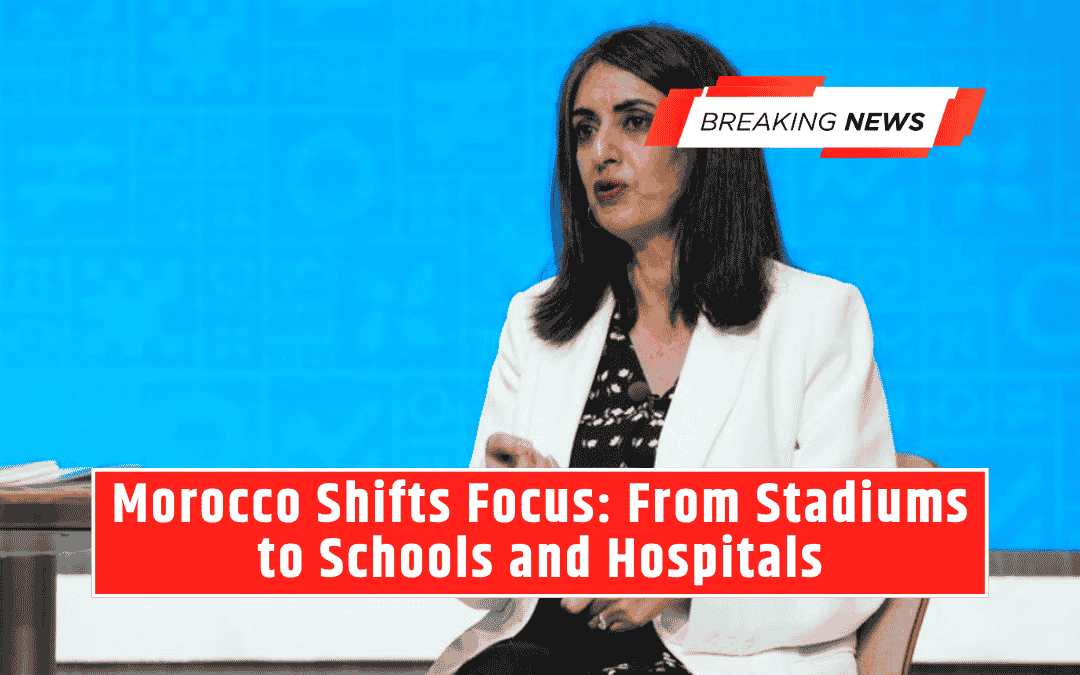
Morocco’s government plans a major shift in spending priorities for its upcoming budget, Finance Minister Nadia Fettah Alaoui told Reuters in Washington. The new focus: improving healthcare and education while tackling deep regional inequalities.
The move follows weeks of youth-led protests revealing frustration over poverty and limited access to basic public services despite the country’s high-profile infrastructure projects.
Listening to the Protests
“The youth have made it clear—they want better education and health,” Alaoui said during the International Monetary Fund and World Bank meetings.
She acknowledged that Morocco currently spends just under 9% of its GDP on those two sectors, but pledged to communicate reforms more transparently. The government intends to redirect funding toward projects that deliver immediate benefits for citizens.
Health and Education Take Center Stage
Alaoui emphasized that budget revisions will prioritize operational hospitals, local clinics, and schools. “We will reallocate for short-term, quick wins, because people cannot wait for reform to happen,” she said.
The updated budget, expected to be presented to parliament after late October, aims to ensure essential services are available without forcing residents to travel long distances for medical care.
Reducing Regional Inequalities
Another pillar of the upcoming budget is narrowing the gap between Morocco’s urban and rural areas. The government will channel additional funds toward mountain and oasis regions—areas that have historically lagged behind in access to services and economic opportunity.
“This effort means probably some additional money,” Alaoui explained, “but much more focus on efficiency, coordination, and maintaining macroeconomic stability.”
Balancing Reform and Stability
While the government plans to shift spending priorities, Alaoui underscored that fiscal stability remains essential.
Morocco’s leadership, under King Mohammed VI, has made regional equity a national goal, but Alaoui said reforms must be implemented without jeopardizing the broader economy.
The approach seeks to blend targeted investment with prudent financial management to ensure lasting progress.
Economic Strategy and Inflation Targets
Addressing Morocco’s broader economic outlook, Alaoui said her ministry plans to introduce medium-term inflation targeting within the next two years. The government expects to set a formal inflation goal—likely between 2% and 3%—by late 2026 or early 2027.
This marks a step toward greater transparency in monetary policy, as Morocco currently publishes its inflation targets only on an annual basis.
Gradual Approach to Currency Reform
On the question of currency flexibility, Alaoui indicated Morocco will proceed cautiously. The dirham, currently pegged to a basket of 60% euro and 40% U.S. dollar, has been allowed to float within a narrow 2.5% band since 2018.
While a full float is under consideration, she warned that small and medium-sized enterprises (SMEs) are not yet ready for such a transition. “The big companies are prepared, but smaller ones still need protection,” she said.
Preparing for a Future Float
Alaoui explained that before any move toward a freer exchange rate, the financial sector must ensure smaller firms can handle currency fluctuations.
The government aims to maintain “the house in order” while gradually preparing businesses and banks for future reforms. For now, Morocco’s focus remains on building resilience and stability in its domestic economy before taking that next step.
Managing Debt Responsibly
When asked about potential international debt sales, Alaoui said Morocco has no immediate plans to return to global markets. However, she noted the kingdom would continue to be a regular issuer over time.
This cautious stance reflects the government’s preference to balance investment in social programs with maintaining a healthy debt profile and fiscal discipline.
A Budget Shaped by Public Voices
As Morocco prepares to present its new budget to parliament, the message from the streets is reshaping national priorities. Youth frustration has transformed into a catalyst for reform, pushing the government to invest where it matters most—education, health, and regional equity.
The coming months will test Morocco’s ability to turn those promises into tangible progress while keeping its economic foundations strong.