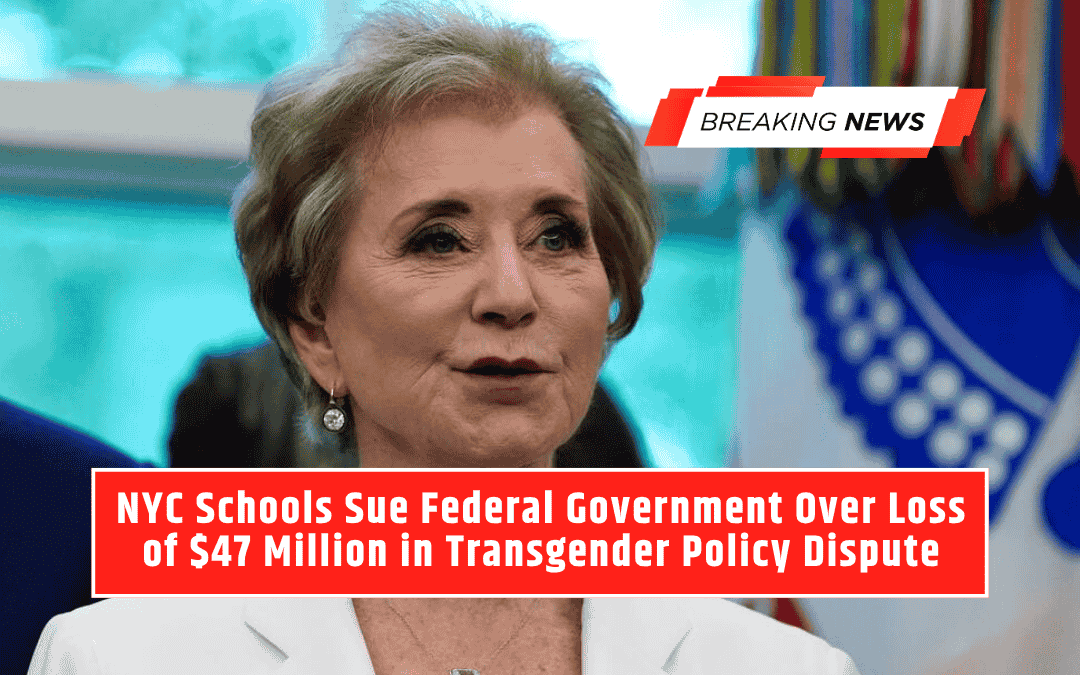
After months of uncertainty, education data organizations welcomed news that the U.S. Department of Education will proceed with its Civil Rights Data Collection (CRDC) process for K–12 schools.
The announcement follows a turbulent year marked by major federal funding cuts, staffing reductions, and shifting priorities under the Trump administration.
The CRDC — a critical tool for monitoring educational equity — had been delayed earlier this year, sparking concern among researchers, advocates, and educators who rely on its findings to track disparities and inform policy.
Background: Delays and Funding Challenges
In February, the Department of Education postponed the CRDC survey distribution to school districts, citing the need to revise questions for “consistency with federal civil rights laws.” This move came amid $881 million in cuts to education research contracts, part of a broader effort to reduce federal spending on education oversight.
The delay alarmed researchers who depend on CRDC data to identify inequities related to race, gender, disability, and socioeconomic status. With the 2021–22 data being the most recent available, advocates feared the gap between reporting cycles would grow, leaving schools and communities without timely insights.
Despite the setback, the department confirmed that it will finalize data for the 2025–26 school year and begin preparations for data collection in 2027–28. However, experts warn that the recent government shutdown could again slow progress.
The Importance of the CRDC
The Civil Rights Data Collection is the nation’s only comprehensive dataset on educational access and equity across public schools. It helps track disparities in areas such as:
- Discipline and school climate
- Course access and academic programs
- Special education services
- Enrollment by race, gender, and disability
“Schools use these data to identify gaps and develop solutions,” said Tabbye Chavous, executive director of the American Educational Research Association (AERA). “Researchers track equity outcomes, and families use it to advocate for their children. Any delay would leave schools and communities in the dark.”
Controversy Over Gender Data Removal
The updated version of the CRDC removes the nonbinary gender category first introduced in 2021. The change follows a January executive order stating that the federal government recognizes only two genders — male and female.
Critics argue that this rollback erases visibility for nonbinary students and undermines efforts to monitor their experiences.
The National Center for Youth Law condemned the decision, warning that it could “increase these students’ exposure to bigotry” by making it harder to document incidents of bullying and discrimination.
“We believe these data are valuable,” the organization wrote in public comments. “The removal of the collection of data on nonbinary youth will make it harder to monitor their experiences and ensure they are protected.”
Reduced Oversight of Discipline Data
Another major policy shift involves the Department of Education’s decision to stop collecting state-level data that identifies school districts disproportionately disciplining students with disabilities or from certain racial groups.
Civil rights advocates say this change will make it harder to monitor discriminatory disciplinary practices — particularly exclusionary measures such as suspensions or expulsions that disproportionately affect students of color.
“This data is essential to understanding how discipline policies impact marginalized students,” said one education equity advocate. “Without it, accountability becomes almost impossible.”
Centralization of College Admissions Data
While reducing K–12 data oversight, the administration plans to centralize data on how colleges consider race and sex in admissions decisions. This initiative aligns with efforts to increase transparency around affirmative action policies, though experts note that such work will be difficult given the severe staffing shortages in education data offices.
The education data workforce has been reduced to what insiders describe as a “skeleton crew,” raising questions about the government’s capacity to implement new data initiatives effectively.
The resumption of the Civil Rights Data Collection offers a temporary reprieve for educators and advocates who depend on federal data to promote equity and inclusion. Yet, significant concerns remain — from the removal of nonbinary categories to reductions in discipline reporting and funding instability.
As the Department of Education moves forward with plans for the 2025–26 and 2027–28 collections, stakeholders emphasize that maintaining comprehensive, transparent, and inclusive data is essential. Without it, efforts to ensure equal educational opportunities for all students risk being left in the dark.