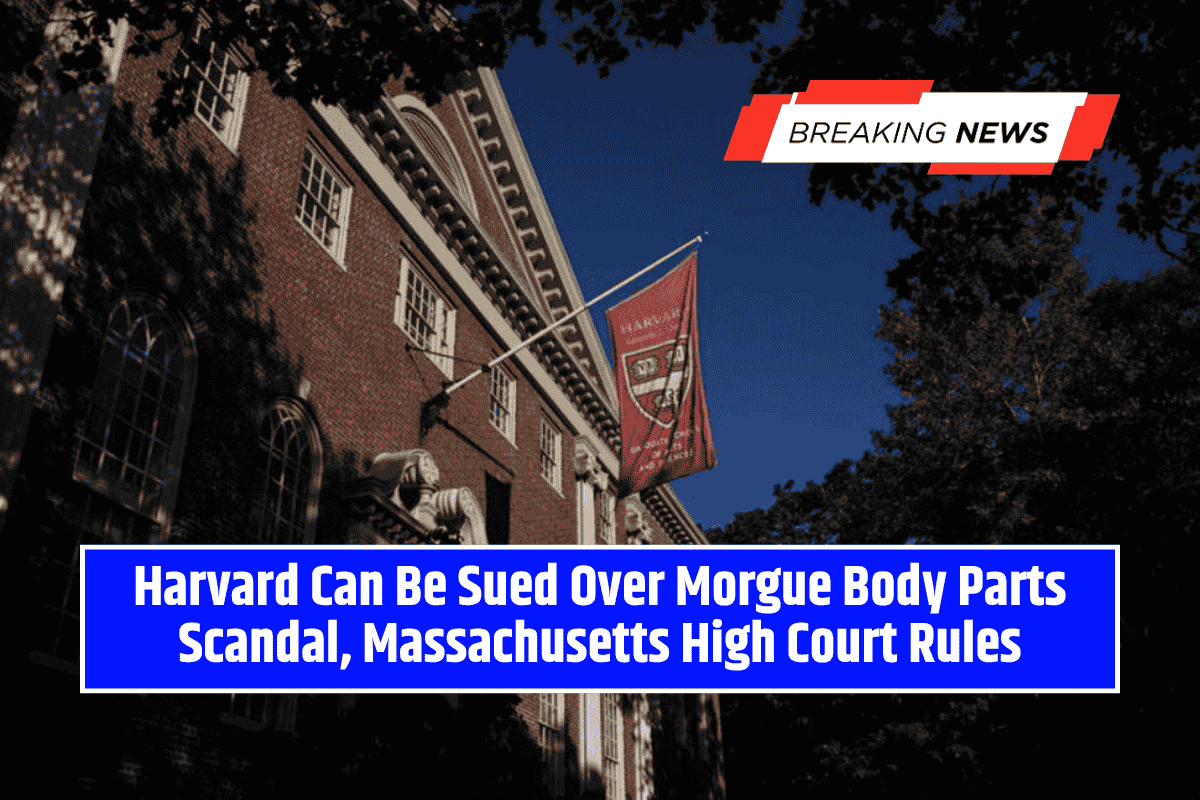
BOSTON (Reuters) — Harvard University can be sued by families who allege it failed to properly oversee its medical school morgue, where a former manager stole and sold human remains donated for scientific research, the Massachusetts Supreme Judicial Court ruled on Monday.
The state’s highest court unanimously overturned a lower court decision that had dismissed 12 lawsuits filed by 47 relatives of donors whose bodies were allegedly mishandled.
The justices found that the families had plausibly alleged bad faith and negligence on Harvard’s part in managing its anatomical gift program.
A “Macabre Scheme” and Institutional Failure
The case stems from the actions of Cedric Lodge, the former morgue manager at Harvard Medical School, who prosecutors say began stealing body parts in 2018.
Lodge allegedly removed heads, brains, skin, and other organs from cadavers and sold them from his home in Goffstown, New Hampshire, often inviting buyers to view remains on Harvard property.
Justice Scott Kafker, writing for the unanimous court, described the scheme as “macabre” and condemned the university’s failure to safeguard donated remains.
“It had a legal obligation to provide for the dignified treatment and disposal of the donated human remains, and failed miserably in this regard, as Harvard itself recognized,” Kafker wrote.
The ruling also revived claims against the managing director of Harvard’s anatomical gift program, holding that the allegations of institutional oversight failure were sufficient to proceed to trial.
Harvard’s Response and Ongoing Legal Fallout
In a statement, Harvard Medical School called Lodge’s conduct “abhorrent and inconsistent with the standards and values that Harvard, our anatomical donors, and their loved ones expect and deserve.”
Lodge pleaded guilty in May to transporting stolen goods across state lines and is awaiting sentencing. The scandal has deeply shaken confidence in academic body donation programs across the United States.
Court Rejects Harvard’s Immunity Claim
The trial court had previously ruled that Harvard was immune from liability under Massachusetts’ Uniform Anatomical Gift Act, which grants protection to institutions that act “in good faith” when handling donated remains.
However, the high court disagreed, finding that the families’ allegations — including Harvard’s failure to implement proper security measures, prevent unauthorized access to the morgue, and detect Lodge’s long-running misconduct — were sufficient to suggest the university did not act in good faith.
Justice Kafker emphasized that Harvard’s “horrific and undignified treatment continued for years,” suggesting systemic negligence rather than isolated misconduct.
Families Seek Accountability
Attorney Jeffrey Catalano, representing the families, welcomed the decision, calling it a critical step toward transparency and justice.
“My clients feel that their right to get additional answers as to how and why this happened on Harvard’s property for so long has been vindicated,” Catalano said.
The ruling clears the way for the plaintiffs to proceed with their lawsuits — a development that could lead to a landmark trial examining institutional accountability in medical research programs.