As technology reshapes the world of work, millions of young people risk being left behind. Globally, 65 percent of adolescents are not on track to gain the skills needed for the jobs of the future — a future where nine out of ten occupations will require digital literacy.
The skills gap is even wider between high- and low-income countries, and women remain 25 percent less likely than men to know how to use information and communication technologies for basic tasks.
While traditional education pathways still matter, the world’s youth now need a blend of life, digital, and green skills to thrive in the 21st century.
Recognizing this, UNICEF and its partners are working across the globe to help young people develop practical, adaptable, and market-relevant skills — from coding and entrepreneurship to vocational trades and environmental stewardship.
Life Skills, Digital Skills, and Green Skills
UNICEF’s approach to youth empowerment goes beyond formal schooling. The organization promotes life skills, also known as transferable or 21st-century skills, which include communication, critical thinking, problem-solving, and teamwork.
These help young people gain confidence, improve literacy and numeracy, and transition successfully into employment or entrepreneurship.
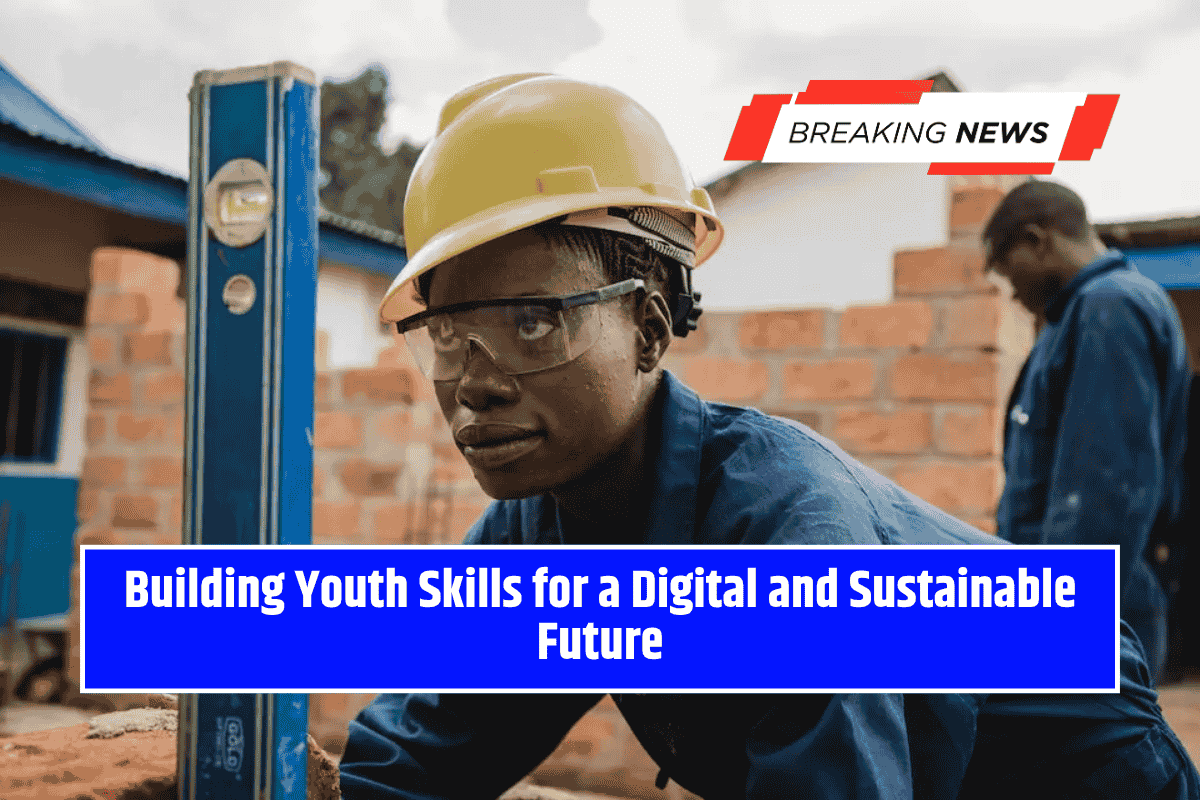
Life skills programs often serve as a foundation for vocational training — teaching specific technical abilities like carpentry, masonry, and mechanics. In conflict-prone areas, UNICEF integrates skills development into peacebuilding strategies to promote social cohesion.
In Nyunzu, Tanganyika province, Democratic Republic of the Congo, for example, UNICEF-supported programs train adolescents in trades such as masonry, carpentry, soap making, and food preparation, helping youth earn livelihoods while contributing to community stability.
UPSHIFT: Empowering Youth Through Innovation
Launched in Kosovo in 2014, UNICEF’s UPSHIFT program helps young people build skills in problem-solving, creativity, leadership, and entrepreneurship. The program has since expanded to over 50 countries, with girls and young women making up more than half of all participants.
Through mentorship, workshops, boot camps, and online courses, UPSHIFT teaches youth how to identify and address community challenges. Participants pitch innovative solutions, and winning ideas receive seed funding and mentorship for implementation.
In Poland, the program has supported Ukrainian refugee students, offering them a sense of purpose and connection through skill-building and community engagement.
“Our project wasn’t selected for the finals, but we still want to implement it,” says Tasya, 15, a refugee from Ukraine. “We aim to help young people choose a future profession by organizing meetings with business representatives.”
Generation Unlimited (GenU): A Global Skilling Movement
Generation Unlimited (GenU) is a global public-private partnership launched in 2018 by the United Nations and UNICEF, active in 89 countries. Its mission is to prepare youth for the digital and green economy through education, skills development, and employment opportunities.
One regional effort, GenU Sahel, reaches over 100 million youth across West and Central Africa, mobilizing resources to expand entrepreneurship and fair employment for marginalized populations.
In 2023, GenU launched The Green Rising, a global initiative to promote youth-led climate action. This program connects young people with resources, education, and mentorship to develop sustainable solutions and strengthen their role as environmental leaders.
Skills4Girls: Closing the Gender Gap in STEM
UNICEF’s Skills4Girls initiative spans 20 countries, training over 300,000 girls annually in STEM (Science, Technology, Engineering, and Mathematics), digital literacy, and social entrepreneurship.
Globally, only 35 percent of STEM graduates are women, and Skills4Girls aims to close this gap by addressing barriers such as stereotypes, limited access to technology, and social discrimination.
In Cambodia, the program teaches coding, design, and storytelling through game development.
“After joining Skills4Girls, I realized that I am a fast learner,” says Non, 15, from Siem Reap. “Once we created our own game, I found it was even more fun than playing them. What boys can do, we girls can do too.”
Makani Centers in Jordan: Creating Opportunities for All
In Jordan, nearly one in four adolescents aged 15–19 is not in school, training, or employment. UNICEF supports Makani centers (“My Space” in Arabic), which offer informal learning focused on digital literacy, entrepreneurship, and vocational training for both refugees and host communities.
“I used to be unsure of what I wanted to study,” says Masa, 16, a student in East Amman. “After attending Makani classes, I realized I want to become an engineer and use drawing to help me in that field.”
These centers provide young people with a safe space to learn, explore, and plan their futures.
Creatable Project in Burundi: Innovation for Sustainability
In Burundi, where climate shocks threaten food security, the Creatable project empowers youth with practical, eco-friendly skills. Students learn to design and implement sustainable solutions — from grow-bag gardening to fuel-efficient cookstoves.
“Creatable has given students a different image of their future,” says Oscar Sinzinkayo, a science teacher in Muyinga province. “We hope it helps them start small projects after school to sustain themselves.”
Some participants have already launched small businesses applying what they learned, demonstrating the project’s real-world impact.
Vocational Training in Afghanistan: A Second Chance for Girls
In Afghanistan, where secondary and higher education for girls remains banned under Taliban rule, UNICEF supports vocational programs for young women aged 15–25 in Herat province.
Participants learn literacy, carpet weaving, and wool spinning, helping them regain confidence and independence.
“This training gave me a second chance to still have a dream,” says Ruqia, a trainee. “We work together like a team and share our knowledge. Without this program, I would have nothing to do. It means a comeback from a distressed life.”
Rupantaran Life Skills Program in Nepal: Empowering Youth Through Radio
In South Asia, 80 percent of youth aged 15–24 lack essential secondary-level skills. To bridge this gap, UNICEF and partners developed Rupantaran, a 21-week life skills program in Nepal delivered both in-person and over the radio.
The course blends social, financial, and emotional learning—covering topics such as negotiation, goal setting, and mental well-being.
Graduates like Antima, 16, and Sahira, 16, have turned their training into income-generating opportunities, running small businesses in food and tailoring.
“It’s fulfilling to know I’m using my skills to help my family,” Sahira says.
As the global workforce transforms, the ability to adapt, learn, and innovate has never been more vital. UNICEF’s youth skills initiatives — from UPSHIFT to Skills4Girls and Generation Unlimited — are empowering millions of young people to seize opportunities in a rapidly changing world.
By equipping youth with life, digital, and green skills, these programs not only prepare them for the jobs of the future but also enable them to become creators, entrepreneurs, and leaders in their communities.