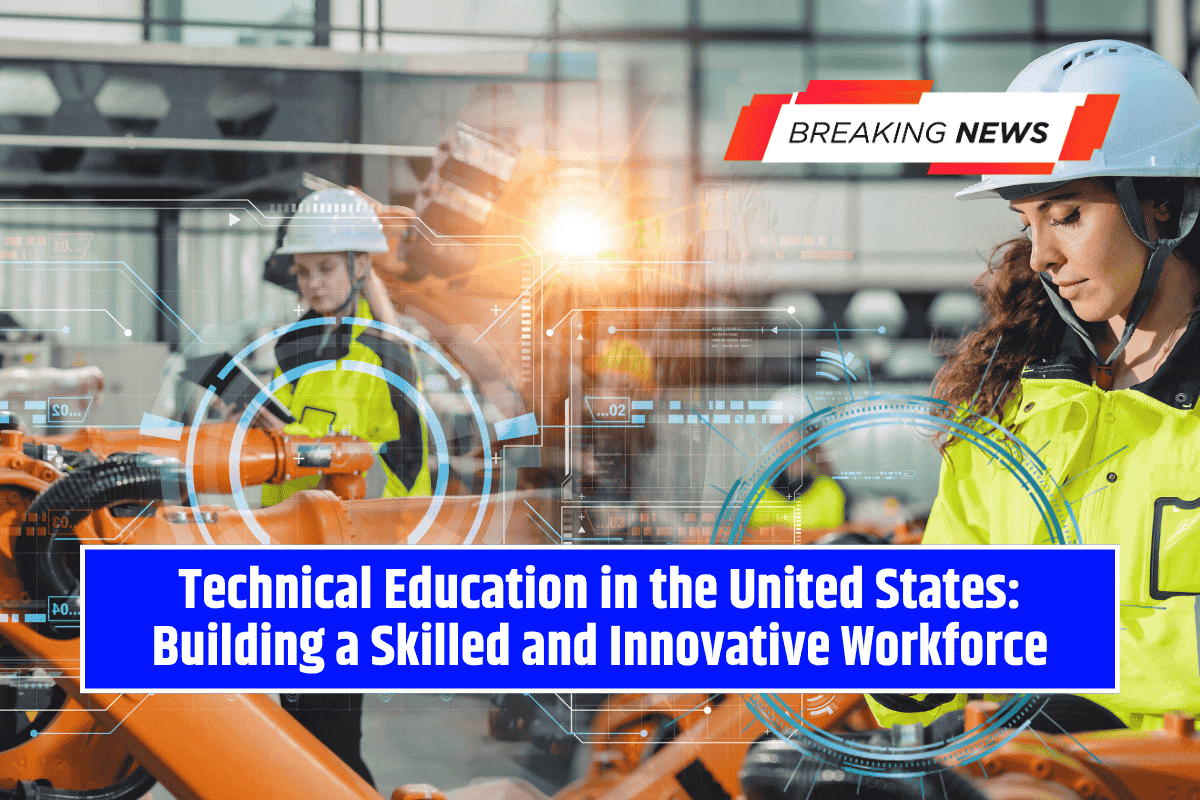
Technical education in the United States refers to the academic and vocational preparation of students for careers that apply scientific and technological knowledge in practical ways.
It focuses on the understanding and application of science, mathematics, and technology to solve real-world problems rather than on purely manual or trade-specific skills.
Technical education provides students with the tools they need to work in fields that require technical expertise — bridging the gap between vocational training and professional education.
The Focus of Technical Education
The U.S. technical education system emphasizes applied learning and problem-solving. Students are trained to use technology, interpret data, and apply engineering principles to everyday work challenges.
This hands-on, technology-based approach equips graduates with both the theoretical foundation and the practical skills demanded by a rapidly changing economy.
While vocational education trains individuals for skilled trades, technical education prepares learners for positions that involve operating, maintaining, or managing complex systems — from information technology to healthcare equipment.
Goals and Objectives
The primary goal of technical education in the United States is to prepare students for middle-skill careers — occupations that require specialized training beyond high school but not necessarily a four-year bachelor’s degree. These roles are often classified between skilled trades and professional engineering or scientific positions.
Graduates of technical programs often become technicians or technologists, serving as the essential link between engineers, scientists, and production teams. Their work supports innovation, manufacturing, research, and service delivery across key industries.
Technical vs. Professional Education
In the U.S., technical education and professional education serve distinct yet complementary purposes:
- Technical education emphasizes applied sciences and technology implementation. It prepares students to use existing technologies effectively.
- Professional education focuses on theoretical depth and leadership in fields like engineering, medicine, and law.
For example, an electrical technician trained through technical education installs and maintains systems designed by an electrical engineer — illustrating how the two educational pathways work together to drive the U.S. economy.
Key Fields of Technical Education
Technical education programs in the United States are diverse and aligned with national and regional labor-market needs. Major fields include:
- Information technology and computer systems
- Healthcare and medical technology
- Advanced manufacturing and robotics
- Agriculture and environmental management
- Business administration and logistics
- Graphic design and industrial arts
- Energy and sustainability technologies
These sectors represent some of the fastest-growing career areas in the U.S., with high demand for skilled technicians who can adapt to evolving technologies.
Institutions Offering Technical Education
Technical education in the U.S. is widely available through a variety of institutions that focus on career readiness and workforce development, including:
- Community colleges offering two-year associate degree programs
- Technical and vocational institutes providing diplomas and certifications
- Four-year universities with applied science and technology divisions
- Apprenticeship programs supported by the U.S. Department of Labor and local industries
Most programs are designed to be completed in two years and often include internships, work-based learning, and industry partnerships that connect students directly to employers.
The Importance of Technical Education in the U.S. Economy
Technical education plays a critical role in maintaining the strength and competitiveness of the American workforce. As industries evolve through digitalization, automation, and green innovation, the demand for skilled technicians continues to grow.
Through partnerships among federal and state governments, industry leaders, and educational institutions, technical education helps:
- Reduce skills gaps in high-demand industries
- Support local and regional economic development
- Promote lifelong learning and career advancement
- Strengthen the overall innovation ecosystem of the United States
Technical education in the United States is a cornerstone of modern workforce development. By combining academic knowledge with practical training, it prepares individuals for meaningful, well-paying careers in science, technology, engineering, and related fields.
As the nation continues to prioritize innovation and sustainability, investment in high-quality technical education remains essential for a strong and inclusive economy.